

Sustainability in Practice
Sustainability in Practice
Adam West, Director
Sustainability in Practice
Sustainability is not a separate discipline within our work; it informs decision-making from the earliest stages of design through to project delivery. As signatories to Architects Declare, we continually review and strengthen our approach to support more sustainable forms of development and seek to actively improve environmental and social systems through regenerative design.
We believe sustainability requires a holistic approach that recognises the interdependence of environmental, social and economic factors. Successful places emerge from balancing these oft- competing demands rather than pursuing individual objectives in isolation. Decisions about density, materiality, energy performance, biodiversity, mobility and wellbeing are closely linked, and understanding these relationships is fundamental to creating resilient and enduring places.
Our work is guided by five interconnected themes:
Environment and Place
Well-designed urban living plays an important role in reducing environmental impact. We believe encouraging long-term stewardship, through the creation of attractive, high-quality places where people want to live, work and spend time, supports more sustainable patterns of development while reducing pressure on undeveloped land. We design buildings for longevity, selecting robust materials and construction approaches that weather gracefully and remain adaptable over time.
Carbon and Resources
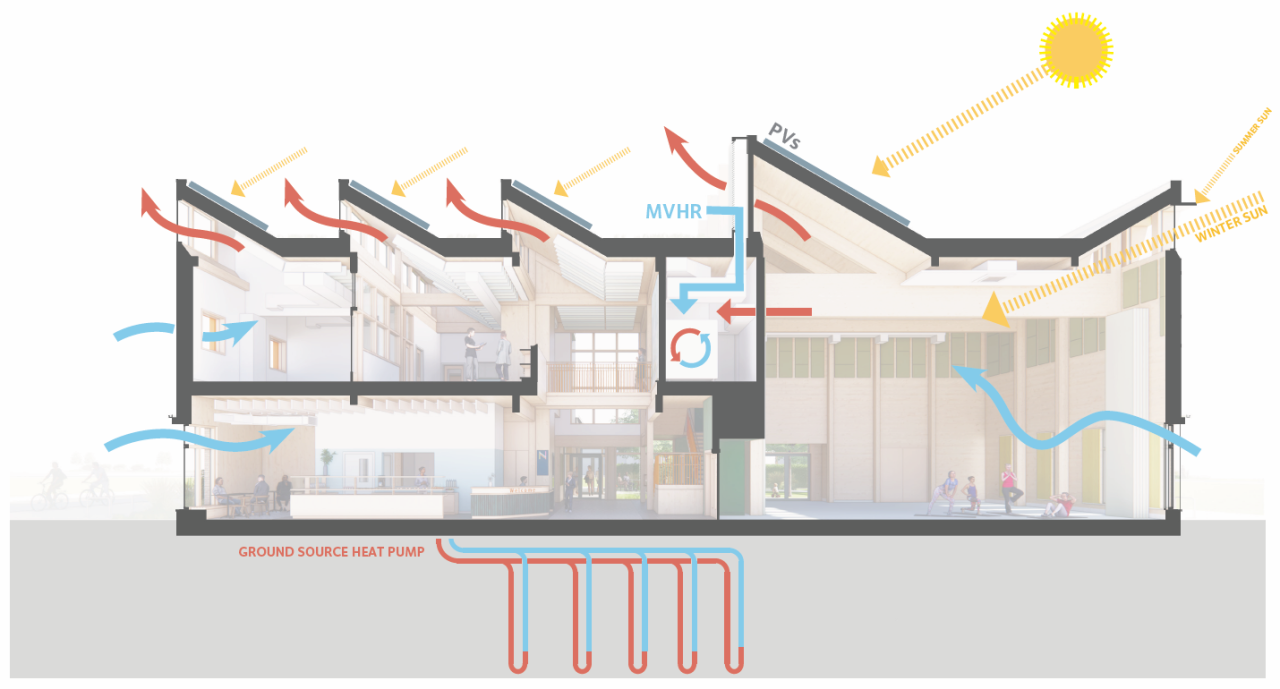
Reducing energy demand remains a fundamental principle. Through careful consideration of building fabric, orientation and performance, we seek to minimise operational energy use while improving comfort for occupants. As the industry increasingly focuses on embodied carbon, we look for opportunities to reduce material use, extend building life, and prioritise refurbishment and reuse when viable.
Mobility and Connectivity
Successful places depend on strong connections between buildings, public spaces and communities. We design developments that encourage active travel, support healthy lifestyles and contribute positively to the public realm. Streets, squares and shared spaces are integral to urban life, and we consider their quality and usability as carefully as the buildings themselves.
Resilience and Biodiversity
Buildings must respond not only to today's climate but also to future environmental conditions. We design for resilience, adaptability and long-term performance while seeking opportunities for regenerative design principles to enhance biodiversity and ecological value wherever possible. The loss of biodiversity in the UK and the importance of nature as a contributor to wellbeing drive our design approach and passion for high-density development in sustainable locations.
Health and Wellbeing
Healthy environments support healthier lives. Access to daylight, nature, fresh air, walkable neighbourhoods, and safe and inclusive designs, all contribute to wellbeing and form an indispensable part of our approach to placemaking.

CLOSE